
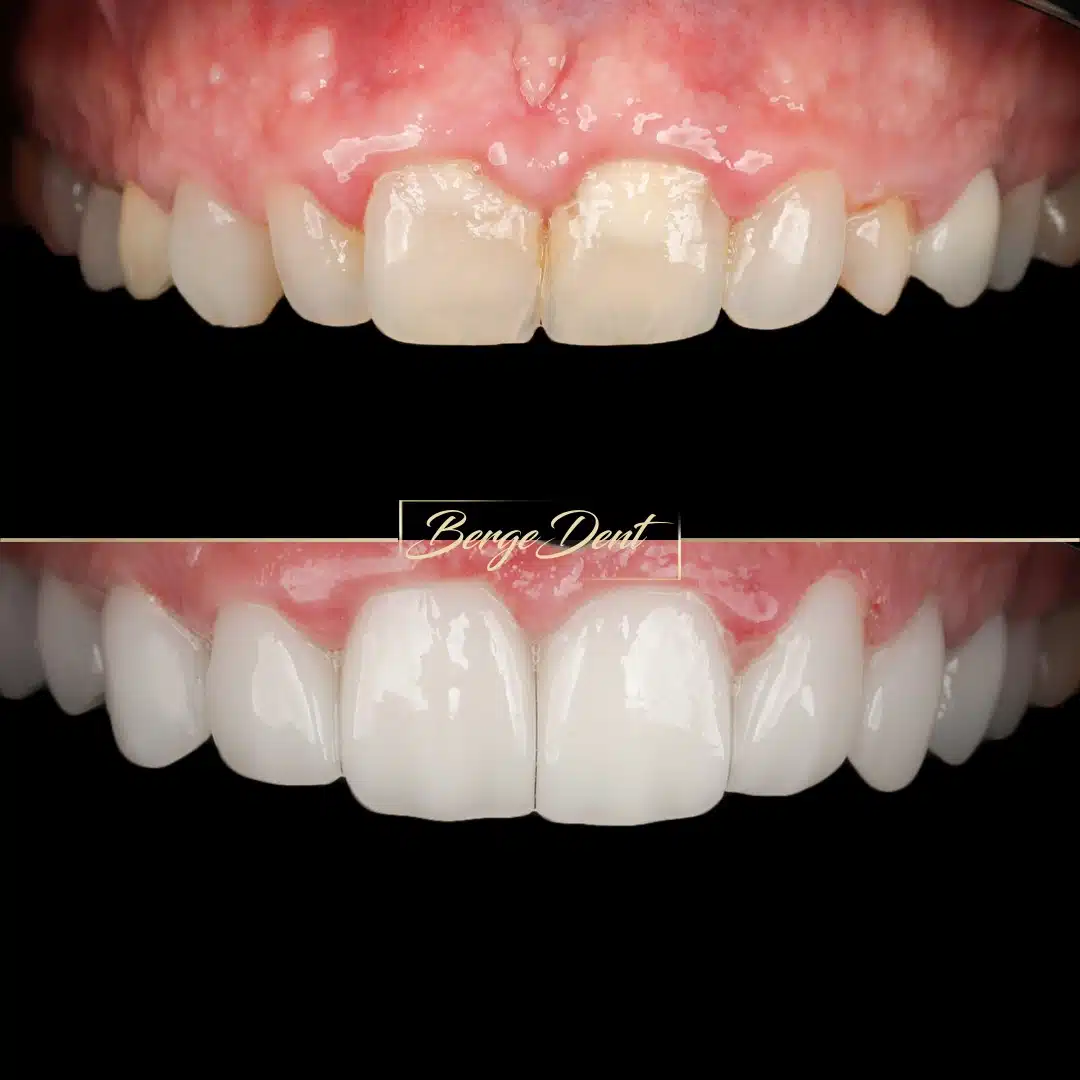
A dental veneer is a thin porcelain shell bonded to the front surface of a tooth. Application requires removing as little as 0.3–0.5 mm of tooth structure — making it a conservative option that preserves the existing tooth.
Teeth must be healthy before veneers can be placed
Veneers are not recommended in patients with active decay, gum disease or significant bite problems. These issues must be resolved first. This is why every esthetic planning process begins with a complete clinical examination and radiological review.
What is the difference between a veneer and a crown?
A veneer covers only the front surface of a tooth; a crown encases the entire visible portion. When tooth structure is sufficient and there are no functional problems, a veneer is less invasive. In cases of extensive restoration or tooth fracture, a crown may be more appropriate.
- Effective for discolouration and staining
- Suitable for minor chips or cracks
- Can close gaps between teeth (diastema)
- Can improve minor misalignment aesthetically
- Risk assessment is required in patients with strong jaw muscles or bruxism
Veneer planning at Bergedent
At our clinic, veneer planning is supported by digital smile design and mock-up evaluation. Seeing the anticipated result before treatment begins supports better decision-making for both patient and clinician.