
Closest to a natural tooth
The crown placed on an implant delivers the look and function closest to a natural tooth.
The most permanent solution for missing teeth. Every case is assessed individually with 3D imaging and clinical examination.
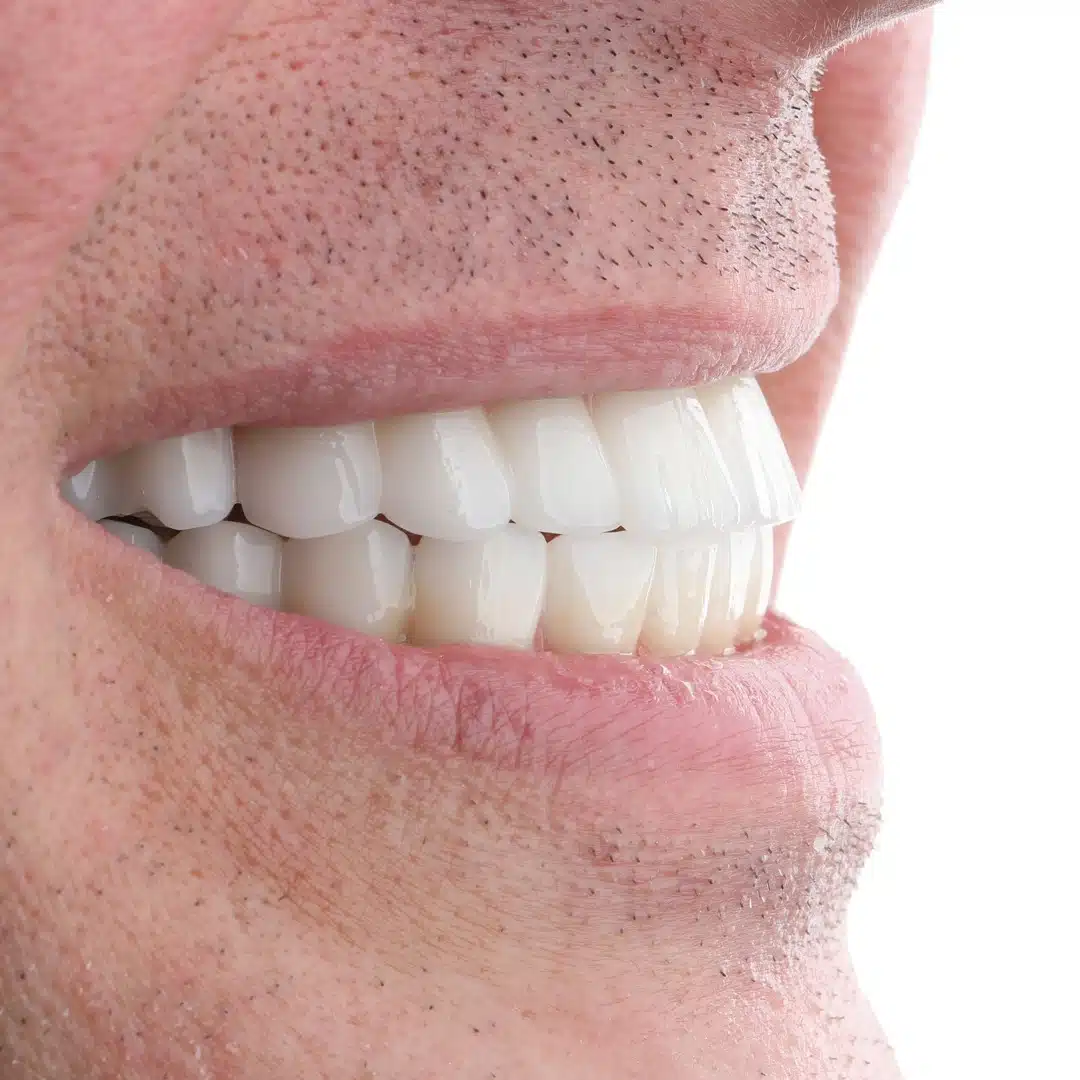
CBCT-led planning
Implant cases are planned after reviewing bone volume and restorative requirements together.
A dental implant replaces both the root and the visible part of a missing tooth — functionally and aesthetically. A titanium or zirconia screw is placed in the jawbone, then a crown or bridge is fitted on top.
At Bergedent, every implant case is assessed by MSc Dt. Tunç Berge using CBCT (cone-beam CT). Bone volume, density and anatomy are evaluated before a written treatment plan is issued.
Closest to a natural tooth
The crown placed on an implant delivers the look and function closest to a natural tooth.
Preserves jawbone
Without a tooth root, the jawbone resorbs over time. An implant stimulates the bone and prevents this loss.
No damage to adjacent teeth
Unlike a bridge, neighbouring teeth do not need to be trimmed.
Long-term solution
With proper care and annual check-ups, an implant can function for a lifetime.
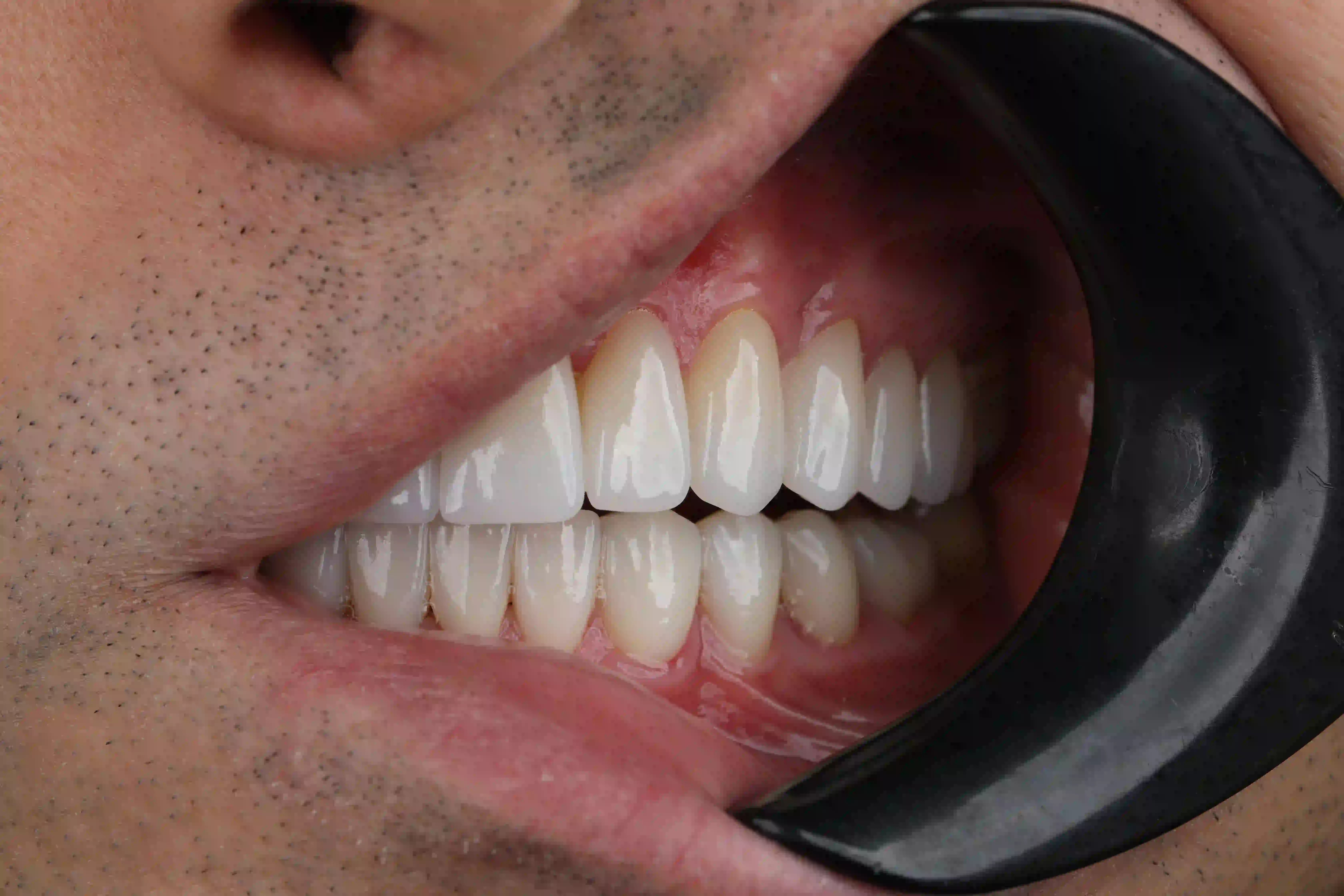
Clinical assessment
Occlusion, hygiene, and long-term maintenance are also reviewed before surgery is scheduled.
CBCT Scan & Clinical Examination
3D imaging analyses bone volume and quality. Appropriate implant type, diameter and length are determined.
Surgical Placement
The implant screw is placed in the jawbone under local anaesthesia. The procedure typically takes 30–60 minutes.
Healing (Osseointegration)
Biological integration between implant and bone takes place. This process takes 6–12 weeks.
Prosthetic Stage
After healing, the abutment and crown are placed, completing the functional and aesthetic restoration.
The procedure is carried out under local anaesthesia — no pain during surgery. Mild discomfort afterwards is normal and usually resolves within 2–3 days.
Any adult whose jawbone has finished developing (typically 18+) can receive an implant. There is no upper age limit; general health is assessed case by case.
With regular oral hygiene and annual check-ups, the implant fixture can last a lifetime. The crown on top can be replaced after around 10–15 years.
If bone volume is inadequate, bone grafting or sinus lifting can be performed to create the necessary foundation. This adds one treatment stage.
A single implant typically requires 2–3 clinical visits (examination/CBCT, surgery, prosthetics). Including osseointegration time, total treatment duration ranges from 3–6 months.