
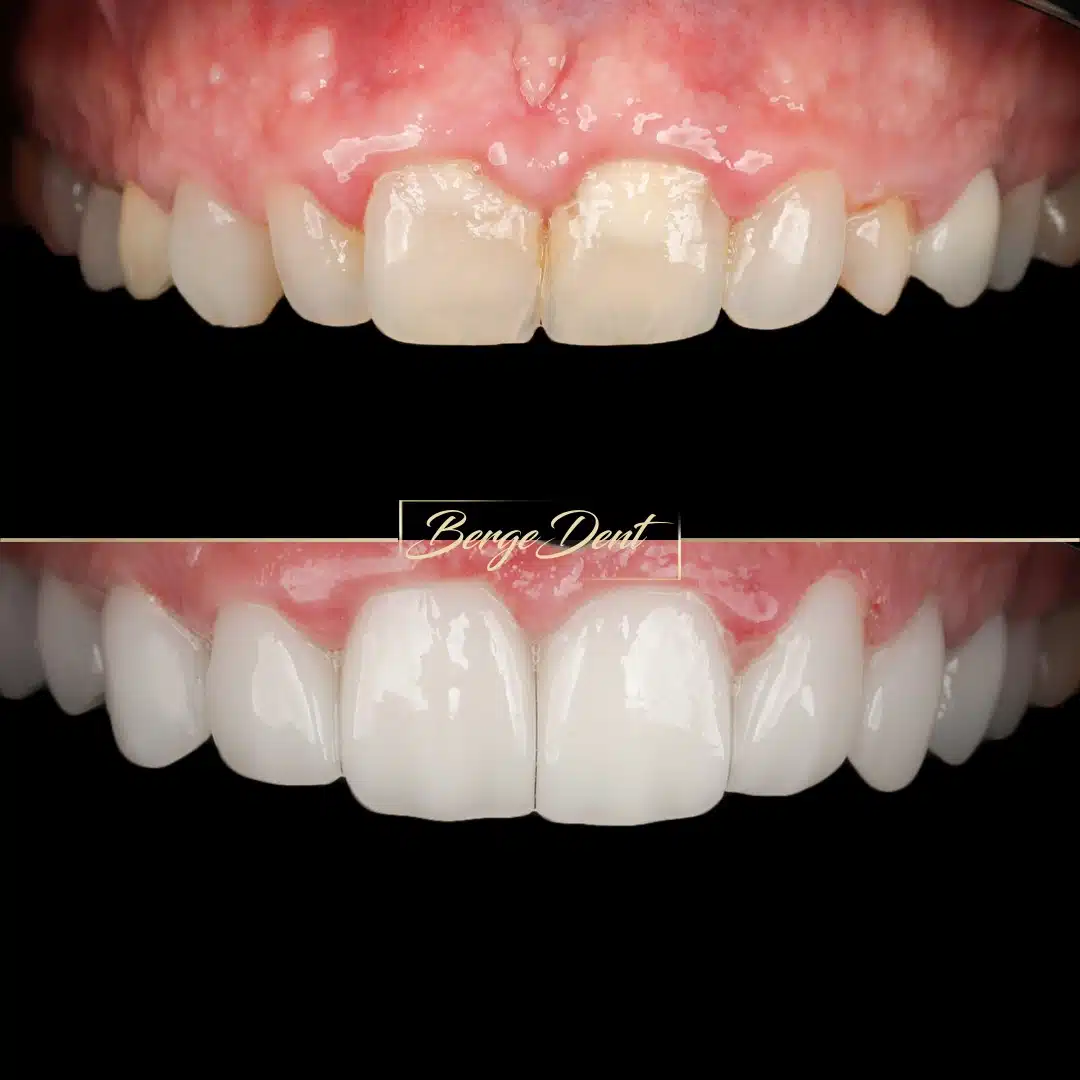
Are you happy with your smile, or has hesitation kept you from making a change because you keep hearing things like "cosmetic procedures ruin your teeth"? That's exactly where the problem starts: social media, secondhand opinions, and unreliable sources spread far too much misinformation about cosmetic dentistry. "Whitening erodes enamel," "veneers don't last," "Hollywood smiles don't suit everyone"... Sound familiar?
In this guide, we'll break down the 12 most common claims about cosmetic dentistry from a clinical perspective, covering laminate veneers, bonding, zirconia crowns, and smile design—separating myth from evidence-based fact.
Quick Summary (TL;DR)
- Laminate veneers don't "ruin" teeth; only a thin layer of enamel is removed for minimal tooth preparation.
- Zirconia crowns are different from veneers; they're better suited for decayed or root-treated teeth.
- Bonding is the most economical option but shorter-lived than veneers (5–8 years vs. 10–15 years).
- Whitening doesn't erode enamel; temporary sensitivity afterward is a normal side effect.
- Smile design isn't just about white teeth—shape, alignment, gums, and facial proportions all work together.
What Is Cosmetic Dentistry, Really?
Cosmetic dentistry isn't simply about changing tooth color. It's about creating a personalized smile that takes into account your facial structure, age, lip movement, and gumline. A skilled dentist doing this work also prioritizes oral health, chewing function, and long-term durability. In other words, the goal is to enhance aesthetics while protecting health—not one at the expense of the other.
12 Common Myths About Cosmetic Dentistry: Which Are True?
1. "If You Get Veneers, Your Teeth Will Be Ruined"
Myth: Veneers require aggressively shaving down teeth, which then leads to cavities.
Fact: That's not accurate. In a properly performed veneer procedure, the dentist typically removes very little tooth structure—usually only 0.3–0.7 mm of enamel. The goal isn't to "grind down" the tooth but to create a surface the veneer can bond to securely.
When treatment is done by a skilled dentist:
- The nerve tissue (pulp) is usually protected.
- A precise margin fit keeps decay risk low.
- Veneers can last for many years.
When problems do occur, they usually stem from over-preparation or poor margin adaptation—not from the technique itself. The dentist's skill makes the difference.
2. "Zirconia Crowns and Laminate Veneers Are the Same Thing"
Myth: Both are "caps" placed on teeth, so there's no real difference.
Fact: They're completely different restorations. Here's why:
- Feature — Laminate Veneer — Zirconia Crown
- Where it's applied — Front surface only — Wraps the entire tooth
- Tooth preparation — Minimal (0.3–0.7 mm) — More extensive (all sides)
- Expected lifespan — 10–15 years — 10–20 years
- Effect on tooth structure — Largely preserved — Tooth is reshaped
- Best for — Minor color/shape issues — Large cavities, root-treated teeth
- Appearance — Natural light transmission — Modern zirconia is highly aesthetic
Bottom line: veneers preserve tooth structure better than most options. Crowns are typically reserved for teeth that have suffered more significant damage.
3. "Teeth Whitening Erodes Your Enamel"
Myth: Whitening gel works like an acid, permanently weakening tooth structure.
Fact: Professional whitening (performed under dental supervision) works by breaking down pigment molecules—when done correctly, it doesn't erode enamel or damage its crystal structure. It's a controlled process that preserves the tooth's structural integrity.
Important note: Over-the-counter products sold without professional oversight may have unregulated pH levels and ingredients. These can cause gum irritation and lasting sensitivity. Using a system recommended by your dentist is far safer. Want to know more about whitening? See: /beyazlatma-sss.
4. "After Whitening, Teeth Will Be Permanently Sensitive"
Myth: Once you whiten your teeth, they'll stay sensitive forever.
Fact: No. Post-whitening sensitivity is usually temporary—it typically fades within days to a few weeks. Fluoride applications or a desensitizing toothpaste can help during this period.
Lasting sensitivity is more likely when:
- Cavities or cracks weren't detected beforehand.
- Whitening is repeated too often or without professional guidance.
- Unregulated products are used.
This is why a dental evaluation before treatment is so important.
5. "If I Get a Smile Like That Celebrity, It'll Look the Same on Me"
Myth: If you show your dentist a celebrity smile from Instagram, yours will turn out identical.
Fact: No, because every smile has to be customized to the individual. A "Hollywood smile" isn't a one-size-fits-all template. You and that celebrity have:
- Different face shapes.
- Different ages.
- Different lip movements.
- Different gum visibility.
- Different tooth proportions.
Applying the same smile design to different faces tends to look disproportionate and artificial. A good dentist takes your facial features, age, gender, and personality into account to design a smile that suits you specifically. Digital smile analysis and simulation software are invaluable tools for this.
6. "Smile Design = Just Making Teeth Look Pretty"
Myth: Once the smile looks good, the job is done.
Fact: Not at all—appearance alone isn't enough. You also need:
- A proper bite: A misaligned bite can lead to chipped teeth or restoration failure over time.
- Healthy gums: A balanced smile depends on gum health and contour.
- Balanced chewing forces: Uneven pressure on a veneer or adjacent teeth can cause fracture.
During the design process, the dentist evaluates gum contours, lip support, and jaw mechanics. Otherwise, you might end up with something that looks beautiful but fails easily. To learn why gum health matters so much in aesthetics, see: /dis-eti-hastaliklari.
7. "Once You Get Veneers, You Never Have to Think About Them Again"
Myth: Laminate veneers last forever.
Fact: While durable, they have a limited lifespan:
- Laminate veneers: 10–15 years (longer with good care)
- Zirconia crowns: 10–20 years
- Bonding: 5–8 years
Some discoloration, small chips, or edge wear over time is normal. Here's what helps extend their lifespan:
- Avoid brushing too hard.
- Wear a night guard if you clench or grind your teeth.
- Limit staining foods and drinks, such as coffee, tea, red wine, and tobacco.
8. "After Whitening, All My Teeth Will Be the Same Shade"
Myth: Whitening makes every tooth in your mouth exactly the same color.
Fact: Results depend on each tooth's starting color and structure:
- Yellow-toned teeth: Tend to respond well to whitening.
- Gray-toned teeth: Response may be more limited.
- Root-treated or individually stained teeth: A perfectly uniform result isn't always possible.
If noticeable color differences remain after whitening, veneers or bonding may be considered for those specific teeth. Your dentist evaluates these differences beforehand and sets realistic expectations accordingly.
9. "Smile Design Just Means Whitening Your Teeth"
Myth: Smile design is purely about whitening.
Fact: Definitely not. Smile design addresses all of the following together:
- 1. Color (how white the teeth should look)
- 2. Tooth shape (oval, triangular, rectangular—varies by person)
- 3. Alignment and spacing (gaps, rotation)
- 4. Tooth length (how much shows when smiling)
- 5. Gum contour (symmetry, margin line)
- 6. Smile arc (how it aligns with your lower lip)
A comprehensive design works with all of these elements together; color is just the starting point.
10. "Bonding and Veneers Give the Same Result—Why Would Veneers Cost More?"
Myth: Since bonding is cheaper and looks similar to veneers, why bother with veneers?
Fact: There are real differences in material, durability, and appearance:
- Feature — Bonding (Composite) — Laminate Veneer
- Material — Composite resin — Porcelain/ceramic (lab-made)
- Expected lifespan — 5–8 years — 10–15 years
- Color stability — Prone to staining — More stable
- Wear rate — Faster — Slower
- Tooth preparation — Minimal — 0.3–0.7 mm
- Visual quality — Good, but changes over time — Natural light transmission, more lasting
In short: if you have minor issues and want minimal intervention, bonding can work well. If longevity and color stability are priorities, veneers may be the better investment. An in-person examination with your dentist will determine which option is right for you.
11. "Whitening Doesn't Last—Teeth Turn Yellow Right Away"
Myth: Even after whitening, teeth go back to yellow quickly, so it's a waste of money.
Fact: How long the results last depends largely on your habits:
- If you smoke: Staining tends to happen quickly.
- If you drink coffee, tea, or red wine regularly: Moderate staining is common.
- If you avoid these habits and maintain good oral hygiene: Results tend to last longer.
Teeth may gradually pick up some yellow tint over time, but they generally won't return all the way to their original shade. Touch-up whitening sessions recommended by your dentist, along with good oral hygiene, help maintain results, and touch-ups are usually quick and repeatable.
12. "Cosmetic Dentistry Procedures Hurt Like Crazy"
Myth: If your teeth are being reshaped, the pain must be unbearable.
Fact: Modern local anesthesia makes these procedures generally comfortable:
- Laminate veneers: Tooth preparation is done under anesthesia; most patients describe it as a comfortable experience.
- Teeth whitening: Usually requires no anesthesia; temporary sensitivity may occur.
- Bonding: Quick and comfortable in most cases.
- Zirconia crowns: Anesthesia is used, and treatment is completed over multiple visits.
Pain perception varies from person to person. Discussing your concerns with your dentist before treatment helps set clear expectations and eases anxiety.
Veneers, Crowns, or Bonding: When Is Each Used?
The right choice depends on the extent of tooth damage, your aesthetic goals, and your dentist's clinical evaluation.
Laminate Veneers (Best for Preserving Tooth Structure)
- When is it appropriate? Minor color or shape issues, small gaps, mild misalignment.
- Advantages: Minimal preparation, natural appearance, long-lasting.
- Limitations: May not be sufficient for large cavities or significant tooth loss.
- Lifespan: 10–15 years.
Bonding (Most Economical and Quick)
- When is it appropriate? Small gaps, chipped edges, minor shape corrections.
- Advantages: Often completed in a single appointment, minimal intervention.
- Limitations: Shorter lifespan, more prone to staining.
- Lifespan: 5–8 years.
Zirconia Crowns (Most Durable)
- When is it appropriate? Large cavities, root-treated teeth, fractures, teeth needing full-coverage restoration.
- Advantages: Excellent durability, strong structure.
- Limitations: Requires more tooth preparation.
- Lifespan: 10–20 years.
A single tooth may qualify for more than one option; the best choice depends on cost, aesthetic goals, and clinical status, as determined by your dentist.
Setting Realistic Expectations and Planning With Your Dentist
Success in cosmetic dentistry depends on realistic expectations and careful planning. During your consultation, consider asking:
- 1. "Exactly how much tooth structure will be prepared, in millimeters?"
- 2. "How will my profile change, viewed from the front and the side?"
- 3. "How long is this expected to last, and when might it need to be replaced?"
- 4. "What other options do I have, and why do you recommend this one?"
- 5. "If something goes wrong later, what can we do?"
What are realistic goals?
- Color: Moderate whitening looks natural on most people; excessive whiteness can look artificial.
- Shape: Tooth proportions should match your facial dimensions, or the result can look off-balance.
- After treatment: Temporary sensitivity is common and usually resolves on its own.
Signs of a successful outcome
- No lasting pain (brief sensitivity is normal).
- Comfortable chewing with no food catching between teeth.
- Smooth margins with minimal plaque buildup.
- Your aesthetic goals have been met.
Why Are These Myths So Common?
The answer is fairly straightforward:
- 1. Social media: Heavily edited photos can look deceptively real.
- 2. Secondhand advice: Information passed along by people without direct treatment experience can be misleading.
- 3. Memory of older techniques: Older, more invasive methods still linger in people's minds.
- 4. Poorly managed expectations: Unrealistic promises tend to lead to disappointment.
The takeaway: get your information from reliable sources, and trust your dentist's clinical judgment.
When Should You See a Dentist?
Consult a dental professional if:
- You notice cracks, chips, margin gaps, or color changes in existing veneers, crowns, or bonding.
- You experience pain, sensitivity, or gum swelling weeks after a cosmetic procedure.
- You develop gum bleeding, recession, or persistent bad breath.
- You're considering a cosmetic procedure and want to know which option may suit you.
Start Talking About Your Smile
If you're curious about changing your smile, or you're experiencing issues with existing dental work, talk with a dentist who can guide you through your options. Digital smile analysis, simulation, and a thorough clinical evaluation can help clarify the best treatment path and set realistic goals for your unique situation.
Related Articles
This content is for general informational purposes only and does not replace personalized dental advice. Consult your dentist for diagnosis and treatment. This article has been reviewed by experienced dental professionals.